The Resurrection by Manuel Panselinos
I will not be posting on this blog until after Pascha. I wish you all a fruitful struggle during the rest of lent, and a glorious Holy Week and Pascha.
Christ is Risen!
Tuesday, April 12, 2016
Thursday, January 28, 2016
Letter to a Roman Catholic
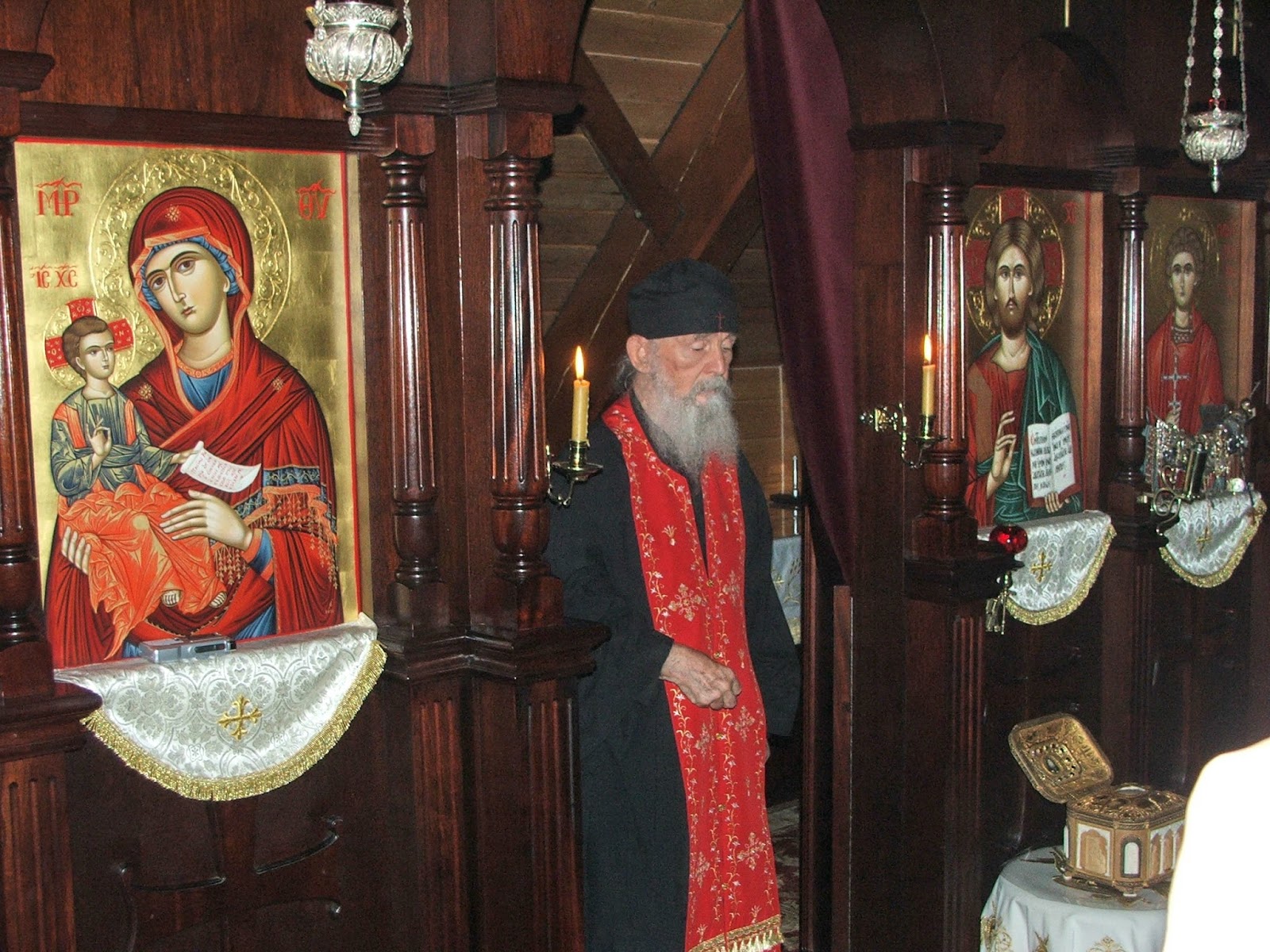
My prayer/reading room in Yakima, WA
Chapel Hill (U.S.), March 1982
Dear Bill,
Even though you never asked it directly, I feel from your words that you do not yet understand why I left the Roman Church to become Orthodox.
You were even a member of one of the least latinized Byzantine parishes, you seem to say, why, then?…
I guess I owe you an explanation, since, a long time ago, when we were both members of the Latin church, we shared the same feelings. These same feelings brought both of us to a Byzantine rite parish, and then myself to Orthodoxy. You could not have forgotten the criticisms that we moved to the Romans: the continual insertion of newtraditions in place of the old ones, Scholasticism, the legalistic approach to spiritual life, the dogma of papal infallibility. At the same time we both reckoned the legitimacy and correctness of the Orthodox Church. A Uniate parish seemed the optimal solution. I remember what I was saying in that period:
I think like an Orthodox, I believe like an Orthodox, therefore I am Orthodox.
Entering officially into the Orthodox Church seemed to me just a useless formality. I even thought that remaining in communion with the Roman Church might be a positive fact, in view of the goal of a possible reunification of the Churches.
Well, Bill, I was wrong. l believed I knew the Orthodox Faith, but it was just a smattering, and quite shallow for that. Otherwise I would not have failed to know the intrinsic contradiction between feeling Orthodox and not being reckoned as such by the very same Church whose faith I stated I was sharing. Only a non-Orthodox may conceive an absurdity like being Orthodox outside of Orthodoxy. Individual salvation does not only concern the single person, as many Westerners believe, but it must be seen in the wider frame of the whole Church Communion.
Each Orthodox Christian is like a leaf: how could he receive the life-giving sap if he is not connected to the vine? (John 15:5)
Orthodoxy is a way of life, not a rite. The beauty of the rite derives from the inner reality of the Orthodox Faith, and not from a search for forms. The Divine Liturgy is not a more picturesque way of saying Mass: it comes forth from, and strengthens, a theological reality that becomes void and inconsistent if excised from Orthodoxy.
When the spirit of the Orthodox Faith is present, even the most miserable service, done in a shack, with two paper icons placed on a couple of chairs to serve as the iconostasis, and a bunch of faithful out of tune as the choir, is incomparably higher than the services in my former Uniate parish, in the midst of magnificent 12th century Byzantine mosaics, and a well-instructed choir (when there was one).The almost paranoid observance of the ritual forms is the useless attempt to make up for the lack of a true Orthodox ethos. I was deluding myself when I believed I was able to be an Orthodox in the Roman communion.
It was a delusion because it is impossible.
The continual interference of Rome in the ecclesiatical life reminds you in due course who is in command. To pretend to ignore this is self-delusion. I tried to avoid the problem, feigning to be deaf and dumb, and repeating to myself that I belonged to the ideal “undivided Church”. My position was quite sinful. First of all, because the undivided Church still exists: it is the Church that never broke with Her past, and that is always identical to Herself: in other words, the Orthodox Church.
Then, because that feeling of being a member of the Undivided Church, which I considered so Christian and irenical, was instead a grave sin of pride. I was practically putting myself above Patriarchs and Popes. I believed I was one of the few who really understood the Truth, beyond old and sterile polemics.
I felt I had the right to ask the Eucharist both from the Romans and the Orthodox, and I felt unfairly treated when the latter denied it to me. I have a great debt of gratitude towards a priest who, in that time, refused to give me Communion. Instead of softly speaking of canonical impediments, as if the matter were a merely bureaucratic problem, he said me bare-facedly:
If it is true that you consider yourself an Orthodox, why is it that you keep belonging to heresy?
I was deeply shocked by those words, and for a long time I did not return to that Church. But he was right. I had understoodwhat Saints, Fathers, Bishops and Priests had not understood for centuries.
According to me, the schism between East and West was a tragic misunderstandingbased merely on political problems and the ponderings of the theologians. And in doing so I indirectly accused many holy people of calculation, superficiality and bigotry. And I was mistaking all of this for Christian charity…
No, Bill, it is impossible to be both Roman Catholic and Orthodox at the same time.
The rite is not all that important. After all, the Latins were Western Rite Orthodox for many centuries. I agree with you that, after the separation, the Romans and the Orthodox have still much in common, but this is not enough to consider both of them part of the same Church. Beyond the well-known doctrinal differences, there is the approach to the Supernatural, the same life of the Church that makes impossible to live the two religious realities at the same time.
We state in the Creed:
“and (I believe) in One, Holy, Catholic and Apostolic Church”.
Until a unity of faith comes, they will be two churches.
The theory (also affirmed by John Paul II) that the Romans and the Orthodox are still the same one Church (despite the schism, and in a mysterious way) sounds well, but it doesn’t hold. It is based only on beautiful words. The differences of faith, on the other hand, do exist, and they are not a mere word-play.
Yes, I know that theological dialogue has been started, and it is even possible (everything is possible to the Lord) that eventually the unity will be reached. But beware! Many good Romans believe that the differences might be resolved by means of a clever statement that, owing to its genericness may sound acceptable by both parties. Having reached an agreement on this statement, both would interpret it according to their understanding, in fact keeping their opinions. Worse still, some propose a unity in diversity, without a formal commitment of faith from any part, but under the universal co-ordination of the Pope of Rome.
Well, all of this is impossible. The Fathers taught us that the the agreement on common faith must be univocal and unequivocal.
Orthodoxy follows the spirit of the Law, rather than the letter. And since it is impossible for the Orthodox Church to introduce new doctrines, it falls on the Romans to abandon a millennium of innovations, and unreservedly return to the faith of the Catholic and Apostolic Church.
This is the only possible platform for an agreement.
History has shown the fallacy of otherwise based unions. And now let me ask you a trivial question: Bill, is the Pope infallible (on his own and not by virtue of Church consensus, as specified in the 1870 dogma) or not? He may not be fallible and infallible at the same time, as it would happen if the two churches were still part of the same Church. One of the two must be wrong.
But Vatican II allowed a great freedom of opinions…
you may answer. Yet this is a sophism. The true Church may not fall in error. If you believe that your Church has erred, or that She is actually erring, you deny that She is the true Church.
I embrace you with unchanged friendship and love in Christ.
Gregorio.
(PS. For the record, Father Gregorio Cognetti told me that the recipient of this letter, soon afterwards, converted himself to Orthodoxy — he is now a tonsured reader of the O.C.A. in Florida — and that this letter was a major factor in his conversion)
Source"
Monday, January 25, 2016
Saturday, December 26, 2015
Wednesday, December 2, 2015
Judge Not by Adelaide Anne Procter (1825-1864)
Our Lord Jesus Christ said:
“Do not judge so that you will not be judged. For in the way you judge, you will be judged; and by your standard of measure, it will be measured to you. Why do you look at the speck that is in your brother’s eye, but do not notice the log that is in your own eye? Or how can you say to your brother, ‘Let me take the speck out of your eye,’ and behold, the log is in your own eye? You hypocrite, first take the log out of your own eye, and then you will see clearly to take the speck out of your brother’s eye."
Matthew 7:1-5 NASB
I think the Victorian poet Adelaide Procter really understood this Gospel reading when she wrote these words, which by the way are the words she lived by;
"JUDGE not; the workings of his brain
“Do not judge so that you will not be judged. For in the way you judge, you will be judged; and by your standard of measure, it will be measured to you. Why do you look at the speck that is in your brother’s eye, but do not notice the log that is in your own eye? Or how can you say to your brother, ‘Let me take the speck out of your eye,’ and behold, the log is in your own eye? You hypocrite, first take the log out of your own eye, and then you will see clearly to take the speck out of your brother’s eye."
Matthew 7:1-5 NASB
I think the Victorian poet Adelaide Procter really understood this Gospel reading when she wrote these words, which by the way are the words she lived by;
And of his heart thou canst not see;
What looks to thy dim eyes a stain,
In God’s pure light may only be
A scar, brought from some well-won field,
Where thou wouldst only faint and yield.
The look, the air, that frets thy sight
May be a token that below
The soul has closed in deadly fight
With some infernal fiery foe,
Whose glance would scorch thy smiling grace
And cast thee shuddering on thy face!
The fall thou darest to despise,—
May be the angel’s slackened hand
Has suffered it, that he may rise
And take a firmer, surer stand;
Or, trusting less to earthly things,
May henceforth learn to use his wings.
And judge none lost; but wait and see,
With hopeful pity, not disdain;
The depth of the abyss may be
The measure of the height of pain
And love and glory that may raise
This soul to God in after days! Source
Adelaide Anne Procter was a poet... the favorite poet of Queen Victoria. She was also a philanthropist who died on Feb 2nd 1864 of tuberculosis, exhausted by her humanitarian efforts to help the poor and the homeless.
Archimandrite Ephraim of the Monastery of St Anthony's in Florence, AZ comments on what has been the teaching of the desert Fathers since the 4th century concerning judging;
"When we judge our brother, we condemn ourselves to a great sin. But when we cover our brother, God will also protect us from great sins. When we expose our brother, we drive the grace of God away from us and He permits us to fall into the same sins so that we learn that we are all weak and that the grace of God supports us.
Each person must bear the weaknesses of others. Who is perfect? Who can boast that he has kept his heart undefiled? Hence, we are all sick, and whoever condemns his brother does not perceive that he himself is sick, because a sick person does not condemn another sick person.
Be careful, I say, about criticism from within, which imperceptibly makes us fatally guilty and deprives us of the life of divine grace and offers as a most bitter drink the death of the soul. I pray that love and freedom from criticism will reign in every expression among you, so that the Holy Spirit may rest in your souls."
What looks to thy dim eyes a stain,
In God’s pure light may only be
A scar, brought from some well-won field,
Where thou wouldst only faint and yield.
The look, the air, that frets thy sight
May be a token that below
The soul has closed in deadly fight
With some infernal fiery foe,
Whose glance would scorch thy smiling grace
And cast thee shuddering on thy face!
The fall thou darest to despise,—
May be the angel’s slackened hand
Has suffered it, that he may rise
And take a firmer, surer stand;
Or, trusting less to earthly things,
May henceforth learn to use his wings.
And judge none lost; but wait and see,
With hopeful pity, not disdain;
The depth of the abyss may be
The measure of the height of pain
And love and glory that may raise
This soul to God in after days! Source
Adelaide Anne Procter was a poet... the favorite poet of Queen Victoria. She was also a philanthropist who died on Feb 2nd 1864 of tuberculosis, exhausted by her humanitarian efforts to help the poor and the homeless.
Archimandrite Ephraim of the Monastery of St Anthony's in Florence, AZ comments on what has been the teaching of the desert Fathers since the 4th century concerning judging;
"When we judge our brother, we condemn ourselves to a great sin. But when we cover our brother, God will also protect us from great sins. When we expose our brother, we drive the grace of God away from us and He permits us to fall into the same sins so that we learn that we are all weak and that the grace of God supports us.
Each person must bear the weaknesses of others. Who is perfect? Who can boast that he has kept his heart undefiled? Hence, we are all sick, and whoever condemns his brother does not perceive that he himself is sick, because a sick person does not condemn another sick person.
Be careful, I say, about criticism from within, which imperceptibly makes us fatally guilty and deprives us of the life of divine grace and offers as a most bitter drink the death of the soul. I pray that love and freedom from criticism will reign in every expression among you, so that the Holy Spirit may rest in your souls."
Monday, November 30, 2015
Trusting in God's Providence, by Archimandrite Ephraim of Arizona
Archimandrite Ephraim of St Anthony's, Florence AZ
"You say that your brother was hungry, thirsty, and so on when he was sick, and he blasphemed. You also said that your brother was committing a mortal sin.
God, though, Who is very compassionate, wanted to bring him to a realization of his guilt so that he would repent, so He gave him this illness out of paternal love as a spiritual medication to cure his soul of its illness.
"You say that your brother was hungry, thirsty, and so on when he was sick, and he blasphemed. You also said that your brother was committing a mortal sin.
God, though, Who is very compassionate, wanted to bring him to a realization of his guilt so that he would repent, so He gave him this illness out of paternal love as a spiritual medication to cure his soul of its illness.
If you had looked after your brother and offered him every bodily comfort, what pains would he have suffered for God to see and have pity on him? You should realize that the more he was tormented, the more his penalty was lightened!
God gave him the illness and allowed the brethren to neglect their duty towards him so that his conscience would make him feel remorse and repent. He is like a patient who is given medicine by a doctor, but lacks the necessary patience. Thus, he curses and grumbles at the doctor, which only leads to his own demise."
Elder Ephraim of Arizona
Source
Source
Saturday, November 28, 2015
The Tree of Jesse - Readings for Advent
Root of Jesse - 16th c. Michael Damaskinos
Icon from Uncut Mountain Supply
A great activity for the whole family during Advent is called the Tree of Jesse. It includes the whole family both adults and children.
A passage from the scriptures is read every day and an ornament is placed on a tree (a real Christmas tree or an artificial one placed in the living room; or a tapestry on the wall) for each one of the stories read. The Tree of Jesse symbolizes all the ancestors of Christ and the events that culminated with the coming of the Messiah, our Lord Jesus Christ.
It is wonderful to sit with the family in front of the fireplace, early in the evening and read each one of the stories. The children get really excited about hanging the ornaments
which can be home made or purchased in Amazon.com and other websites. Below is the list of readings for each day of Advent which are linked to the readings themselves. Between parentheses you will see the name of the ornament for that day.
Below the list I embedded a video that explains the activity. The readings in the list posted here are from the Antiochian Archdiocese's website,
Tree of Jesse with Readings for each day of Advent
and the Twelve Days of Christmas
From the Antioch Archdiocese Website
and the Twelve Days of Christmas
From the Antioch Archdiocese Website
Nov 15 Day 1: The Creation of the World (sun)
Genesis 1-2:4
Genesis 1-2:4
Nov 16 Day 2: Creation of Man (2 people)
Genesis 2:4-25
Genesis 2:4-25
Nov 17 Day 3: Expulsion from Paradise (fruit)
Genesis 3:1-24
Genesis 3:1-24
Nov 20 Day 6: Sacrifice of Isaac (altar)
Genesis 22:1-18
Genesis 22:1-18
Nov 21 Day 7: Jacob’s Ladder (ladder)
Genesis 28:10-17
Genesis 28:10-17
Nov 22 Day 8: Joseph and his Brothers (Coat of many colors)
Genesis 37:3-35
Genesis 37:3-35
Nov 23 Day 9: Joseph’s Elevation (cow)
Genesis 41,42,43,45:1-16
Nov 24 Day 10: Israel’s Blessing for Judah (lion)
Genesis 49:1-2, 8-12
Nov 25 Day 11: Infant Moses (Basket)
Exodus 1:8-22; 2:1-10
Nov 26 Day 12: Moses and the Burning Bush (Burning bush)
Exodus 3:1-20
Exodus 3:1-20
Nov 27 Day 13: Plagues (frog)
Exodus 6:29- 7:16; 7:14-8:15; 11:1; 12:1-13, 28-32
Nov 28 Day 14: Israel passes through the Red Sea (parted sea)
Exodus 13:20-22; 14:1-31; 15:1-19
Nov 29 Day 15: Water in the Wilderness (staff)
Exodus 15:20-16:1;17:1-7
Nov 30 Day 16: Commandments (stone tablets)
Exodus 24:12-18
Exodus 24:12-18
Dec 1 Day 17: Ruth (Shock of Wheat)
Ruth chapters 1-4
Ruth chapters 1-4
Dec 2 Day 18: Birth of Samuel (Horn)
1 Samuel 1:1-2:10
1 Samuel 1:1-2:10
Dec 3 Day 19: Samuel & Eli (Lamp)
1 Samuel 3:1-20
1 Samuel 3:1-20
Dec 4 Day 20: David the Anointed King (sheep)
1 Samuel 16:1-13
1 Samuel 16:1-13
Dec 5 Day 21: David & Goliath (slingshot)
1 Samuel 17:1-11; 17:32-54
Dec 6 Day 22: David the Psalmist (footstool)
Psalm 110
Psalm 110
Dec 7 Day 23: King Solomon (crown)
1 Kings 1:32-40; 2:1-4,10,12; 3:5-14
Dec 8 Day 24: Elias the Prophet (burning Rock)
1 Kings 18;19;2 Kings 2:1-14
Dec 9 Day 25: Jonah the Prophet (whale)
Jonah 1-4:11
Jonah 1-4:11
Dec 10 Day 26: Tobias (fish)
Tobit 5-9:6; 11:2-19; 12:6; 12:11-22
Dec 11 Day 27: Emmanuel (scroll)
Isaiah 7:10-16; 8:1-4,8-10
Dec 13 Day 29: Visits of Kings Foretold (Kings with camels)
Isaiah 60:1-7
Isaiah 60:1-7
Dec 14 Day 30: Daniel (stone smashing a statue)
Daniel 2:31-36,44-45
Dec 15 Day 31: 3 Holy Youths (flames)
Daniel 3:1-88
Daniel 3:1-88
Dec 16 Day 32: God’s Dwelling (Ark of the Temple)
Exodus 40; 1 Kings 8
Dec 18 Day 34: Wisdom, Word and Power of God (open book)
Baruch 3:36-38; 4:1-4
Dec 19 Day 35: Birth & Star Foretold (Star of David)
Micah 5:1-4
Micah 5:1-4
Dec 20 Day 36: Zachariah (Censer )
Luke 1: 5-25
Luke 1: 5-25
Dec 21 Day 37: Announcement (Angel)
Luke 1:26-38
Luke 1:26-38
Dec 22 Day 38: Visitation (Mary)
Luke 1:39-56
Luke 1:39-56
Dec 23 Day 39: Joseph the Betrothed (Joseph)
Matthew 1
Matthew 1
Dec 24 Day 40: Journey to Bethlehem (Manger)
Luke 2:1-5
Luke 2:1-5
Twelve Days of Christmas
Dec 25 Day 1: Nativity (Infant Jesus)
Luke 2:6-7
Luke 2:6-7
Dec 26 Day 2: Light of the World (Radiant Light)
John 1:1-5,10-14
John 1:1-5,10-14
Dec 27 Day 3: Announcement (Angel w/ Trumpet)
Luke 2:8-14
Luke 2:8-14
Dec 28 Day 4: Shepherds Prepare (Standing Shepherd)
Luke 2:15
Luke 2:15
Dec 29 Day 5: Shepherds Visit (Kneeling Shepherd)
Luke 2:16-20
Luke 2:16-20
Dec 30 Day 6: Star of Bethlehem (Star)
Matthew 2:1-2
Matthew 2:1-2
Dec 31 Day 7: Wise Men Visit Herod
Matthew 2:3-7
Matthew 2:3-7
Jan 1 Day 8: Naming of Jesus (Jesus Banner)
Luke 2:20-21; Genesis 17:1-14
Jan 2 Day 9: Visit of the Wise Men
Matthew 2:9-12
Matthew 2:9-12
Jan 3 Day 10: Flight to Egypt (Sword)
Matthew 2:13-23
Matthew 2:13-23
Jan 4 Day 11: Song of Zachariah (dove)
Luke 1:57-64; 1:67-80
Subscribe to:
Comments (Atom)
Recommended Reading
- A Commentary On The Divine Liturgy by St. Nicholas Cabasilas, ISBN: 0-913836-37-0
- A Night in the Desert of the Holy Mountain by Metropolitan Hierotheos Vlachos Trans. by Effie Mavromichali, ISBN: 960-7070-31-3
- A Spiritual Psalter or Reflections On God excerpted by St. Theophan the Recluse from the works of St. Ephraim the Syrian, Trans. by Antonina Janda, ISBN 0-912927-40-2
- Against False Union ( with a prologue by Photios Kontoglou) by Alexander Kalomiros, Trans. by George Gabriel, ISBN: 0-913026-49-2
- Akathist To Jesus Conqueror of Death, by St Nikolai Velimirovich, Trans. by Interklima, Copyright 2009, English Edition, by St Paisius Monastery, Safford, AZ
- An Athonite Gerontikon by Archimandrite Ioannikios, Holy Monastery of St Gregory Palamas Kouphalia, Greece 1991
- Byzantine Theology by John Meyendorff, ISBN: 0-8232-0967-9
- Christ Our Way and Our Life by Archimandrite Zacharias Zacharou, ISBN 1-878997-74-2
- Christ The Eternal Tao by Hieromonk Damascene, ISBN 0-938635-85-9
- Commentary on The Gospel of St Luke by St Cyril of Alexandria Trans. by R.Payne Smith, Studion Publishers, Inc. ISBN:0-943670-01-2
- Concerning Frequent Communion by Nikodemos the Hagiorite, Trans. by George Dokos, ISBN: 960-86778-5-8
- Confronting Controlling Thoughts by Antony M. Coniaris, ISBN: ISBN: 1-880971-88-7
- Conversations with Children by Sister Magdalen, ISBN: 1-874679-21-5
- Counsels from the Holy Mountain by Elder Ephraim of Philotheou, ISBN: 0-9667000-2-3
- Daily Readings with St. Isaac of Syria, Trans. by Sebastian Brock, ISBM: 0-87243-173-8
- Dance, O Isaiah by Constantine Platis, unknown printing 2000
- Diary Of A Pilgrimage from the Ancient Christian Writers series, by Egeria, Trans. by George E. Gingras, ISBN: 0-8091-0029-0
- Drinking from the Hidden Fountain by Thomas Spidlik, ISBN: 0-87907-348-9
- Elder Ephraim of Katounakia Trans by Tessy Vassiliaou-Christodoulou, ISBN: 960-7407-33-4
- Elder Paisios of Mount Athos Spiritual Counsels, Spiritual Awakening vol 2, Trans by Fr. Peter Chamberas, Holy Monastery 'Evangelist John The Theologian' Souroti, Greece 2007
- Elder Paisios of Mount Athos Spiritual Counsels, With Pain And Love for Contemporay Man vol1, Trans by Cornelia A. Tsakiridou & Maria Spanou, Holy Monastery 'Evangelist John The Theologian' Souroti, Greece 2006
- Epistles by Elder Paisios of Mount Athos, Holy Monastery of the Evangelist John the Theologian, Souroti, Greece 2002
- Father Arseny Trans. by Vera Bouteneff, ISBN 0-88141-180-9
- Flame in the Snow, A Life of St Seraphim of Sarov by Julia de Beausobre, ISBN: 0-87243-223-8
- From St. Isaac The Syrian to Dostoyevsky by Archimandrite Vasileios, Trans. by Dr.Elizabeth Theokritoff, ISBN: 1-896800-34-3
- Grace For Grace: The Psalter And The Holy FathersCompiled and Edited by Johanna Manley, ISBN: 0-9622536-1-8
- Hesychia and Theology by Metropolitan Hierotheos Vlachos, Trans. by Sister Pelagia Selfe, ISBN: 978-960-7070-60-9
- His Life is Mine by Archimandrite Sophrony, ISBN: 0-913836-33-8
- I Love Therefore I Am by Fr. Nicholas V. Sakharov, ISBN: 0-88141-236-8
- In The Light of Christ, St Symeon The New Theologian by Archbishop Basil Krivocheine Trans. by Anthony P. Gythiel, ISBN 0-913836-91-5
- Isaac of Ninaveh ( Isaac The Syrian) The Second Part, chapters IV-XLV, Trans. by Sebastian Brock, ISBN: 90-6831-709-1
- Missionary Lettersof Saint Nikolai Velimirovich vol 1, Trans. by Hierodeacon Serafim, New Gracanica Monastery, Grayslake, IL
- Monastic Wisdom, The Letters of Elder Joseph The Hesychast, ISBN: 0-9667000-0-7
- Mount Athos Renewal in Paradise by Graham Speake, ISBN: 0-300-093535
- Nil SorskyTrans. and Edited by George A. Maloney, ISBN: 0-8091-9810-7
- Not of This World,Compiled and Edited by James S. Cutsinger, ISBN: 0-941532-41-0
- On Prayer by Archimandrite Sophrony Sakharov Trans.by Rosemar Edmonds, ISBN 0-88141-194-9
- On The Apostolic Preaching by St. Irenaeus of Lyons, Trans. by John Behr, ISBN: 0-88141-174-4
- On The Cosmic Mystery of Jesus Christ by St Maximus The Confessor, Trans. by Paul M. Blowers & Robert Louis Wilken, ISBN: 0-88141-249-x
- On The Human Condition by St Basil The GreatTrans. by Nonna Verna Harrison, ISBN: 0-88141-294-5
- On The Incarnation by St. Athanasius, ISBN: 0-913836-40-0
- On The Mother of God by Jacob of Serug, ISBN: 0-88141-184-1
- Once Delivered to The Saints by Fr. Michael Azkoul, ISBN: 0-913026-84-0
- Orthodox Faith and Life in Christ by Father Justin Popovich Trans. by Asterios Gerosterios, ISBN: 1-884729-02-9
- Orthodox Psychotherapy by Metropolitan Hierotheos Vlachos, Trans. by Esther Williams, ISBN: 960-7070-27-5
- Orthodox Spiritual Life According to Saint Silouan The Athonite by Harry Boosalis, ISBN: 1-878997-60-2
- Orthodox Spirituality and The Philokalia by Placide Deseille Trans. by Anthon P. Gythiel, ISBN 978-0-9717483-7-8
- Orthodox Spirituality by Metropolitan Hierotheos Vlachos, ISBN 960-7070-20-8
- Passions and Virtues According to Saint Gregory Palamas by Anestis Keselopulos, ISBN: 1-878997-75-0
- Patristic Theology by John S. Romanides, ISBN 978-960-86778-8-3
- Prayers by the Lake by St Nikolai Velimirovich, The Serbian Orthodox Metropolinate of New Gracanica, Grayslake, IL 1999
- Saint Cyril of Alexandria and the Christological Controversy by John McGuckin, ISBN: 0-88141-259-7
- Santa Biblia Antigua Version de Casiodoro De Reina Revisada por Cipriano de Valera(1602) Revision de 1960, Holman Publishers 2008
- St John of Damascus, The Fathers of the Church series, Trans. by Frederic H. Chase, Jr., ISBN: 0-8132-0968-4
- St Seraphim of Sarov, A Spiritual Biography by Archimandrite Lazarus Moore, ISBN: 1-880364-13-1
- St Silouan The Athonite by Archimandrite Sophrony, ISBN 0-88141-195-7
- St. Symeon The New Theologian, On The Mystical Life, The Ethical Discourses, Trans. by Alexander Golitzin 3 vols. ISBN: 0-88141-142-6 and - 143-4, and 144-2
- Standing In God's Holy Fire by John A. McGuckin, ISBN: 1-57075-382-2
- Symeon The New Theologian, The Discourses, Classics of Western Spirituality, ISBN: 0-8091-2230-8
- Symeon The New Theologian, The Practical and Theological Discourses and The Three Theological Chapters, Trans. by Dr. Paul McGuckin, Cistercian Publications Inc. 1982
- The Acquisition of The Holy Spirit by I.M. Kontzevitch, ISBN: 0-938635-73-5
- The Adam Complex by Dee Pennock, ISBN: 1-880971-89-5
- The Ascetical Homilies of Saint Isaac The Syrian, Trans. by Holy Transfiguration Monastery, ISBN: 0-913026-55-7
- The Authentic Seal by Archimandrite Aimilianos, ISBN: 960-85603-3-0
- The Book of Mystical Chapters, Trans. and introduced by John A. McGuckin, ISBN: 1-59030-007-6
- The Boundless Garden by Alexandros Papadiamantis Edited by Lambros Kamperidis and Denise Harvey, ISBN 978-960-7120-23-6
- The Church Fathers ( Ante-Nicene, Nicene and Post-Nicene Fathers, published by Hendrickson Publishers, Peabody Massachusetts, 37 vol. set
- The Enlargement of The Heart by Archimandrite Zacharias Zacharou, ISBN 0-9774983-2-8
- The Faith of Chosen People by St Nikolai Velimirovich, The Free Serbian Diocese of America and Canada, Grayslake, IL 1988
- The Faith of The Saints , A Catechism by St. Nikolai Velimirovich, ISBN:1-932965-06-8
- The Fifty Spiritual Homilies, Pseudo-Macarius, ISBN: 0-8091-0455-5
- The Gurus, the Young Man, and Elder Paisios by Dionysios Farasiotis, ISBN: 978-1-887904-16-2
- The Heart by Archimandrite Spyridon Logothetis, ISBN 960-86639-4-6
- The Hidden Man of The Heart by Archimandrite Zacharias Zacharou, ISBN 978-0-9800207-1-7
- The Holy Bible NKJV, Thomas Nelson, 1992
- The Homilies of Saint Gregory Palamas by Christopher Veniamin, 2 vols. ISBN: 1-878997-67-X; ISBN: 1-878997-68-X
- The Ladder of Divine Ascent by St. John Climacus Edited by Holy Transfifuration Monastery 1979, ISBN 0-943405-03-3
- The Life of St. Anthony by St. Athanasius the Great, Eastern Orthodox Books, Willits, CA
- The Lives of The Holy Prophets by Holy Apostles Convent, ISBN: 0944359-12-4
- The Living Witness of the Holy Mountain by Hieromonk Alexander Golitzin, ISBN: 1-878997-48-3
- The Luminus Eye by Sebastian Brock, ISBN: 0-87907-524-4
- The Mind of the Orthodox Church by Metropolitan Hierotheos Vlachos, Trans. by Esther Williams, ISBN: 960-7070-39-9
- The One Thing Needful by Archbishop Andrei of Novo- Diveevo, ISBN: 91-2927-29-1
- The Orthodox Ethos, Studies in Orthodoxy Edited by A.J. Philippou, Hollywell Press Oxford 1964
- The Orthodox New Testament 2 vols., Published by The Holy Apostles Convent 1999, ISBN: 0-944359-17-5 & 0-944359-14-0
- The Philokalia, The Complete Text compiled by St Nicodemos of the Holy Mountain and St Makarios of Corinth, Trans. by G.E.H. Palmer, Phillip Sherrard and Kallistos Ware Vol 4 ISBN: 0-571-11727-9
- The Philokalia, The Complete Text compiled by St Nicodemos of the Holy Mountain and St Makarios of Corinth, Trans. by G.E.H. Palmer, Phillip Sherrard and Kallistos Ware Vol2 ISBN: 0-571-15466-2
- The Philokalia, The Complete Text compiled by St Nicodemos of the Holy Mountain and St Makarios of Corinth, Trans. by G.E.H. Palmer, Phillip Sherrard and Kallistos WareVol 3 ISBN: 0-571-17525-2
- The Philokalia, The Complete Textcompiled by St Nicodemos of the Holy Mountain and St Makarios of Corinth, Trans. by G.E.H. Palmer, Phillip Sherrard and Kallistos Ware, Vol 1 ISBN: 0-571-13013-5
- The Philokalia: Master Reference Guide Compiled by Basileios S. Stapakis, Trans by G.E.H. Palmer, Phillip Sherrard, Kallistos Ware, ISBN: 1-880971-87-9
- The Prologue of Ohrid, Trans. by Fr. Timothy Tepsic, vol 1 ISBN: 978-0-9719505-0-4; vol 2 ISBN: 978-0-9719505-1-1
- The Psalter Trans. by Holy Transfiguration Monastery, ISBN: 0-943405-00-9
- The Spiritual World of St Isaac the Syrian by Bishop Hilarion Alfeyev, Cistercian Publications, Kalamazoo, Michigan 2000
- The Way of A Pilgrim trans.by R.M. French, ISBN 345-24254-8-150
- We Shall See Him As He Is by Archimandrite Sophrony Sakharov, ISBN 0-9512786-4-9
- Wisdom. Let Us Attend: Job, The Fathers, and The Old Testament by Johanna Manley, ISBN: 0-9622536-4-2
- Words of Life by Archimandrite Sophrony, Trans. by Sister Magdalen, ISBN1-874679-11-8
- Writings from The Philokalia On Prayer of The Heart, Trans. by E. Kadloubovsky and G.E.H. Palmer, ISBN: 0-571-16393-9